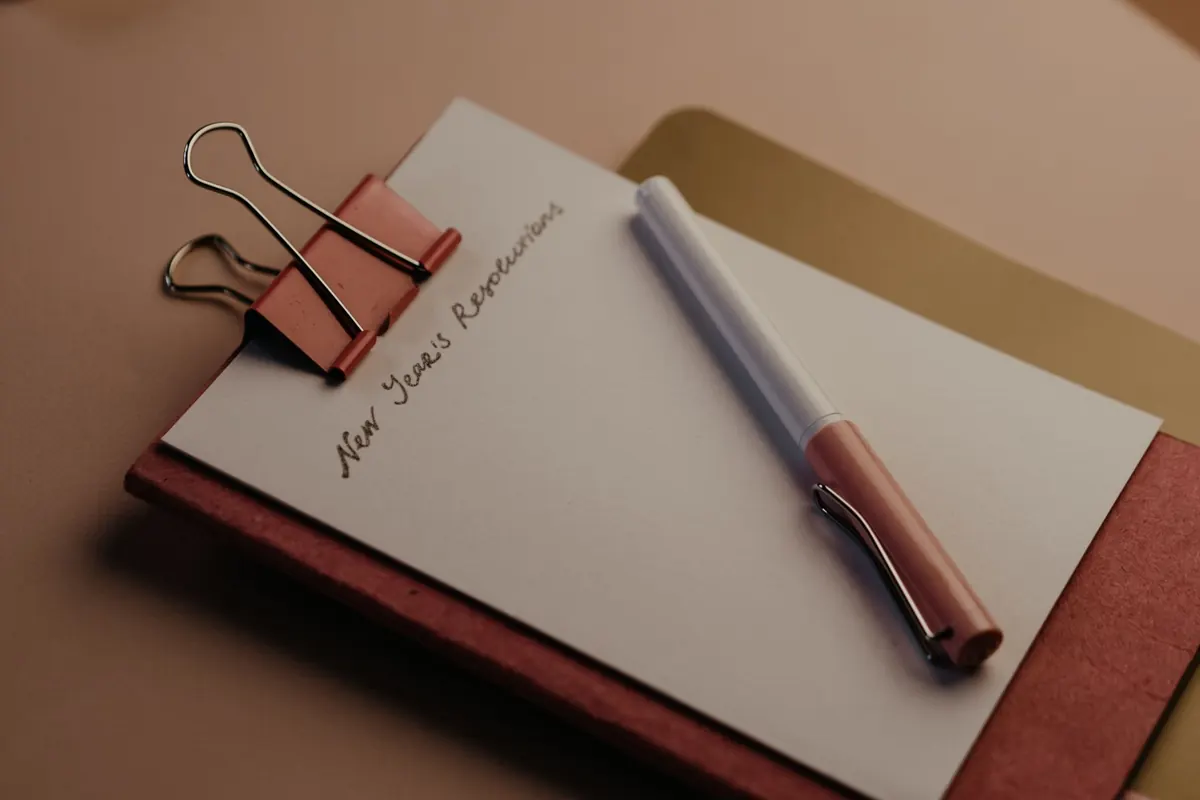
Two notebooks sit on the same shelf in most stationery shops. One is gridded, with an index at the front, numbered pages and a pen loop. The other is blank or lined, with nothing to fill in and no instructions. Both are sold as memory keepers, and both work — they just ask different things of you. The better question isn't which one is more effective. It's which one you'll still be opening on a wet Tuesday in November, six months from now, when nothing remarkable has happened and you have four minutes before bed.
Two Different Assumptions About Memory
Bullet journaling assumes that memory is a management problem. You write things down fast, in shorthand, and a light structure keeps the record findable. The blank diary assumes the opposite: that memory arrives sideways, in sentences, and that writing at length is how you notice what mattered.
Neither assumption is wrong. They fail differently, though. A bullet journal fails quietly — you skip three days, the daily log goes stale, and the abandoned spreads start to feel like a small debt. A diary fails loudly on the page: the blank space at the top of a new entry, especially after a two-week gap, can be hard to face.
What a Bullet Journal Does for Your Memories
The engine of a bullet journal is the daily log. You date the page, then add lines as the day goes: a dot for a task, a dash for a note, a small circle for something worth remembering. That last category is where memory keeping lives. A dash line reading "R. burned the soup, we ordered pizza, talked about the lake until eleven" takes nine seconds and survives for years.
Two mechanics make it unusually good at keeping the past. The first is migration: when you set up a new month, you turn back through the old pages and decide what deserves to carry forward. That rereading is the whole trick. Most diaries are never read again; a bullet journal gets reread every four weeks by design.
The second is the collection. Because the notebook isn't strictly chronological, you can open a page called "Things my son says" or "Every flat we've lived in" and add to it whenever something comes up. Over a year, those pages become the parts of the notebook you actually treasure.
Where it fits
If you like small increments, lists, and the satisfaction of a page that looks used rather than beautiful, this is your format. It suits people who would rather write four truthful lines than a page of hesitant prose.
Where it trips people up
Spread design. It's easy to spend an evening drawing a mood tracker in three colours and never write a sentence about your actual life. The other trap is punishment: a week of empty pages can make you abandon the notebook entirely. Treat gaps as data — write "busy week, nothing logged" and move on.
What a Freeform Diary Does for Your Memories
Open a plain notebook, write the date, and keep going until you stop. No key, no symbols, no index. What you get in return is texture: the specific thing someone said at the kitchen table, the smell of the corridor, the reason a small argument mattered.
Diaries are better at the ordinary. Because there's no requirement that an entry be an event, a Wednesday when you did laundry and watched rain hit the window can get a paragraph. Twenty years later, that paragraph often says more about the year than the holiday entry does.
They're also better at feelings. A bullet journal records "argument with M." A diary records what you were actually afraid of. If your memory keeping is partly about understanding yourself rather than cataloguing events, prose does more work.
Where it fits
Writers, reflectors, and anyone whose days don't break neatly into tasks. It's also the better choice if planners have defeated you before — there is nothing to maintain and nothing to fall behind on.
Where it trips people up
The intimidating blank page, and finding things later. Without dates in the margin you'll be flipping through a hundred pages looking for the trip to the coast. Write the date every time, and keep a one-line index at the back as you go.
A Side-by-Side You Can Actually Use
- Setup time. Bullet journal: an evening to set up a month and its collections, more if you build extra pages. Diary: as long as it takes to uncap a pen.
- Daily effort. Bullet journal: under a minute if you log as you go. Diary: five to fifteen minutes in one sitting.
- Capturing a single line. Bullet journal, easily. Diary, possible but it can feel like cheating, so you skip it.
- Capturing a whole scene. Diary, by a wide margin.
- Handling gaps. Bullet journal forgives them, since a new day is a new line. Diaries make the gap visible every time you turn the page.
- Finding a memory later. Bullet journal wins on index and collections. Diary wins on voice — you remember roughly where you wrote it, not which page.
- What you end up with. A log you can scan in ten minutes, or a stack of prose you'll read slowly.
Try Both for Two Weeks
Preference is a poor guide here. Most people like the idea of one format and the reality of the other. Test it instead.
- Use the cheapest notebook you already own for each. A test shouldn't cost much, and a fancy book makes you hesitate to write badly in it.
- Week one, bullet journal only: date each day, log three lines, and start one collection. "Small good things" is a reliable first page.
- Week two, diary only: sit down at roughly the same time each night and write for ten minutes. No bullets. Describe one scene from the day in detail.
- At the end of each week, reread what you wrote and notice which entries you'd be sad to lose.
- Ask two questions: which format did you open without dread, and which one recorded something you had already forgotten? Those answers beat any preference for how the notebook looks on a desk.
Many people land on a hybrid, and it holds up well: a bullet journal for the daily log, plus one prose page each week written in full sentences. You get the findability and the texture. Give it a month before deciding, and remember that two notebooks and one pen are enough equipment.
The Notebook You Keep Opening Wins
Whichever format you pick, four habits do more for memory keeping than any layout. Write the date, always, even if it's just the day and month. Keep the notebook where you sit, not in a drawer. Include the boring details — the weather, what you cooked, the song on repeat, what someone was wearing. And write about other people, not only yourself; those passages age best.
Then store the finished books somewhere you'll find them. A shoebox under the bed beats a beautiful shelf you never open.
If a format stops working in March, switch. The point was never the system. It was having something honest to read in ten years, in your own handwriting, from a day you'd otherwise have lost.
Photo: Polina ⠀ / Pexels