Autumn is the season that asks to be written down. The air sharpens, the light drops to a low angle, and the ground turns loud underfoot. Six weeks from now the trees will be bare, and you will not remember whether the maples turned early this year, or whether this was the autumn the chestnuts came in small.
Keeping a record of fall walks does not require a special notebook or a free afternoon. It needs two things: noticing while you are out, and writing within a day, while the cold in your hands is still something you can describe.
Pack a kit small enough to forget
The best autumn walk journal starts in a coat pocket. Take a notebook that fits there without a struggle — A6 is plenty — and a pencil rather than a pen. Pencils write in cold weather, survive damp fingers, and do not bleed through thin paper when you press hard on a leaf.
Add one paper envelope or a small glassine bag for whatever you pick up, and use your phone for two things only: a photograph of anything too wet or too large to carry, and a voice note when a sound is easier to catch than to spell. At home, keep a roll of thin tape and a heavy book for pressing.
That is the whole kit. The moment you are carrying a bag of equipment, you stop walking and start collecting, and the walk itself — the part worth remembering — gets lost.
Walk for the senses, not the distance
Choose a route you already know. Familiarity frees you from navigation and lets the small changes show: the hedge that has gone copper at the tips while the rest stays green, the puddle that has been there since the first week of October, the bench where the light hits at four o'clock.
Sight is the easy one, so give it a limit. Instead of "the leaves were beautiful", write what made them so: a sycamore dropping winged seeds onto wet tarmac, a row of limes with one branch already bare, moss on the north side of a wall. Specificity is what makes an entry readable a year later.
Smell is the sense most often left out and the one that brings a walk back fastest. Wet leaves, woodsmoke, cold stone, the faint sweetness of rotting fruit under a tree. Note it while you are standing in it; it will not survive the walk home.
The three-things habit
If you only do one thing differently on your next walk, do this. Name three things for each sense before you turn back:
- Three sights: a colour, a shape, a change since last week.
- Three sounds: one close, one distant, one you cannot identify.
- Three smells or textures: the air, the ground, something you touched.
Nine details is a full page. It is also little enough that you can hold it in your head for the twenty minutes it takes to get home.
Catch the sound before it goes
Sound dates an entry faster than anything else you can write down. Leaves in early October crackle; by November they are a wet slap underfoot. Write verbs first — rustle, rattle, hiss, crunch, whisper — then add the thing making the noise.
Beech mast underfoot: a dry rattle, like small wooden beads in a tin. A blackbird ticking somewhere behind the hedge. Below the path, a door closing twice.
Include the human sounds too. A mower, a school playground at break, a train, someone raking. Autumn walks happen in the middle of ordinary life, and the ordinary noise is often what you remember.
Bring home leaves without wrecking them
Collect less than you want to. Two or three good finds are better than a pocket full of crumbling debris, and thin, dry specimens press best.
- Pick up leaves from the ground, not from living plants or from places where collecting is not allowed; check the rules of parks, reserves and private land.
- Choose flat, dry leaves. Anything damp will spot and go mouldy between the pages.
- Slip finds into the envelope with a scrap of paper noting the date and where you were.
- At home, layer them between sheets of newspaper under a heavy book for a week or two.
- Photograph anything too big, too wet or too fragile, and write a line about it instead.
Winged seeds, a strip of bark, a chestnut shell, a feather found on the path — all of it presses or tapes into a journal and does more work than a paragraph of description.
Turn the notes into a page
Give it twenty minutes at the kitchen table, ideally the same day. Start with a header line: date, place, weather, time out, roughly how far. Then build the rest in short blocks rather than one long paragraph, so the page stays readable when you come back to it.
18 October, canal path to the lock and back, 3.40–4.50pm. Still, grey, the first cold morning.
Saw: one lime bare, the rest holding. Red admiral on the last of the ivy.
Heard: leaves dry enough to crackle. Chainsaw, far off.
Brought home: three beech leaves, a hazel nut case.
One line: walked slower than usual and did not mind.
The five-line entry for busy days
Some weeks you will not have twenty minutes. Use this instead and keep the habit alive:
- The weather, in six words or fewer.
- One sound.
- One colour.
- One thing you picked up or photographed.
- One sentence about how the walk felt.
Five lines is a complete record. Done weekly from the first yellowing to the last leaf, it becomes a season.
Keep it going past the last leaf
Put the notebook by the door, in the same place as your keys, and aim for one walk a week rather than a perfect page. Tape finds in as they dry; if a leaf crumbles, keep the crumbs and date them anyway. Start an index at the back — date, place, one keyword — so you can find the chestnut walk or the foggy morning without flipping through everything.
Do not stop when the trees empty. Bare branches, frost on the grass, the first dark afternoon and the smell of the season turning over are all part of the same record. On the first really cold morning, sit down with a cup of something hot and read the pages from September. You will find details you had already forgotten writing — and that is exactly what the journal was for.
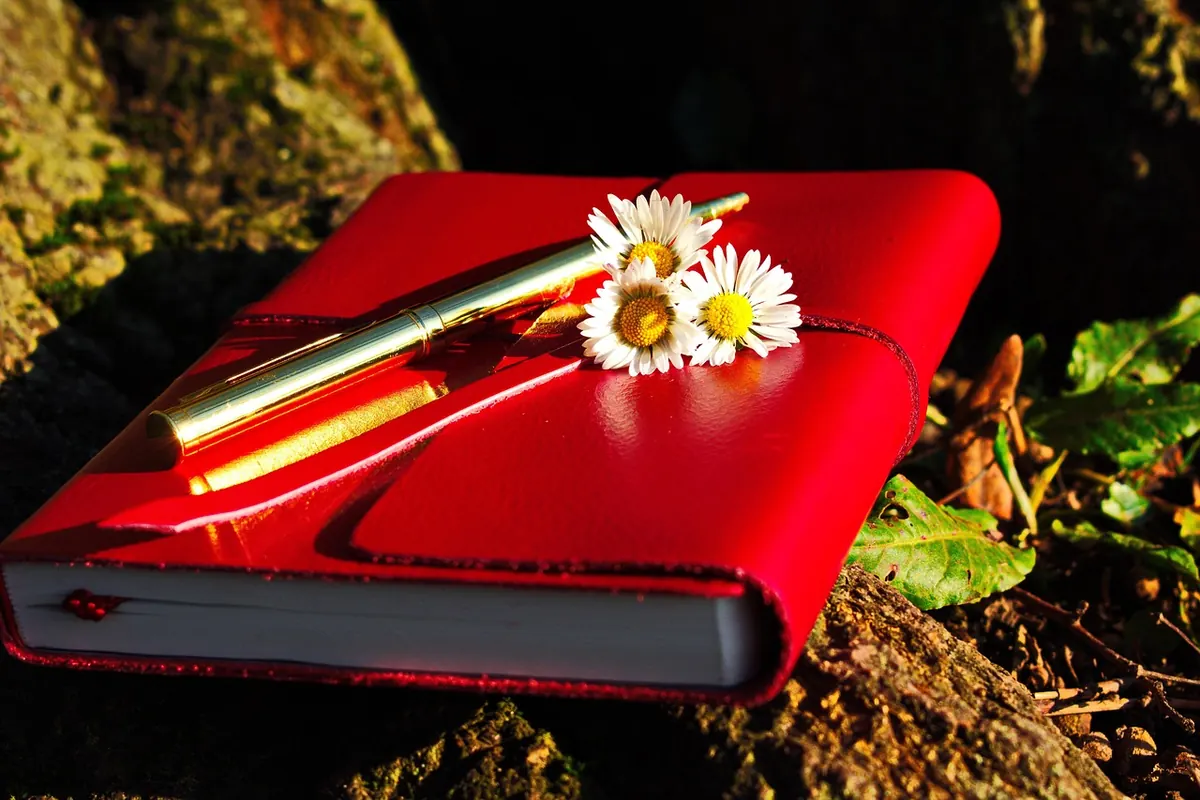
Photo: AndaDeea / Pixabay